
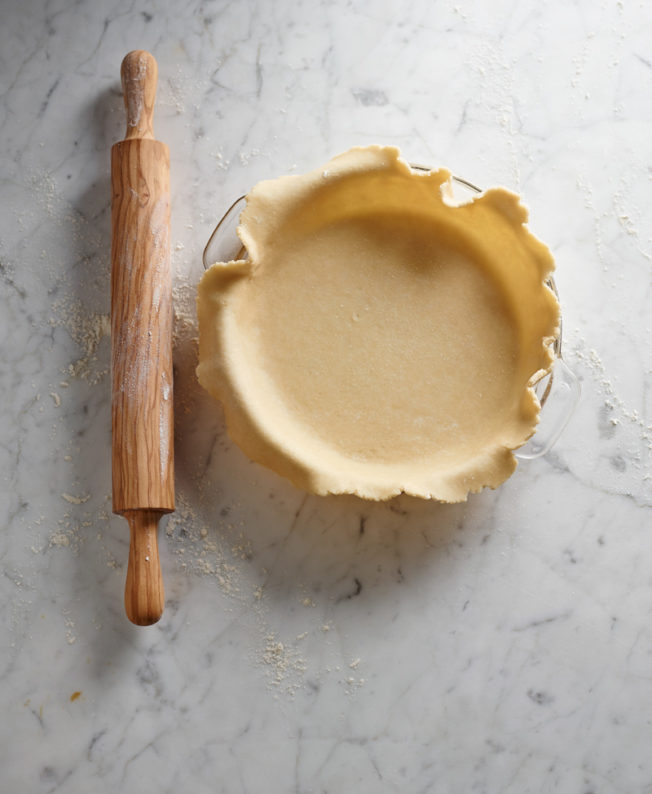
A tender, flaky crust is the best part of any pie, whether it’s filled with fresh fruit or nuts and warm fall spice. The rich taste of real butter produces a versatile and delicious pie pastry, but for a crust that’s easier to handle, try incorporating butter and shortening. The combination of butter and fat provides both stability, from the shortening, and flavor from the butter.
A perfect crust is relatively simple to prepare if you make sure to always follow these three guidelines for making pie dough.
1. Don’t overwork the dough.
Take care not to overblend the fat and flour. Cutting the butter into the flour mixture is a key step in making a good piecrust. The butter must be very cold and hard and in pea-sized pieces before the liquid (usually ice water) is added. If the butter warms up and softens, the flour will absorb it, become sticky and ultimately yield a tough crust.
Handle the pastry no more than necessary. Overworking the piecrust will “work” the glutens in the flour and melt the butter into the flour, again creating a tough crust.
2. Add just enough water to hold the dough together.
Add enough water so the dough can be rolled out easily—better a bit too much water than not enough. Try adding the water a tablespoon at a time, stirring and tossing with a fork after each addition. Stop adding water as soon as the dough comes together in a rough, shaggy mass and can hold together when pinched.
3. Keep everything very, very cold.
Pastry made with butter must be refrigerated for at least an hour before being rolled out. It’s also a good idea to refrigerate the dough again once it’s been placed in the pie dish, before you add the filling and bake.
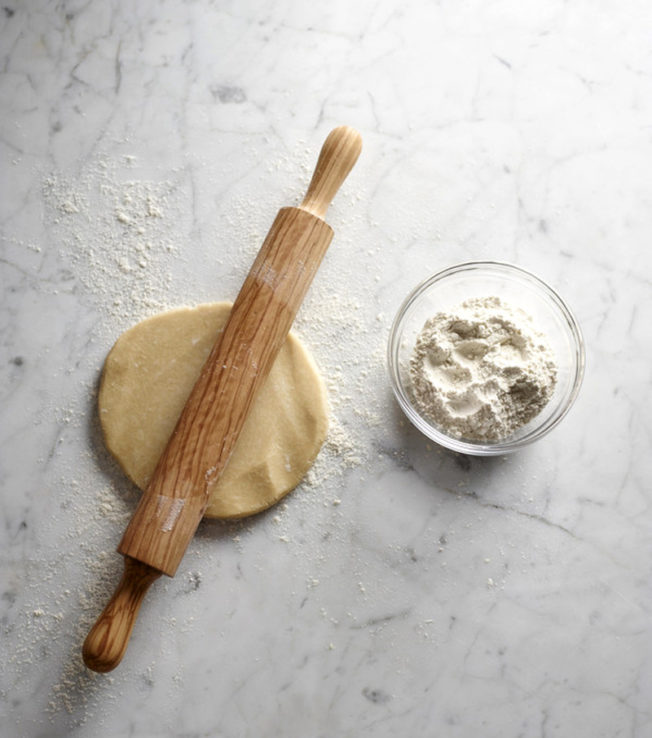
Rolling Out the Dough
Once you’ve made the dough and chilled it, you’re ready to roll out your piecrust. On a lightly floured board or rolling mat, flatten the dough disk with six to eight gentle taps of the rolling pin. Lift the dough and give it a quarter turn. Dust the top of the dough and the rolling pin with flour as needed.
Begin rolling from the middle of the dough round, pushing outward and stopping the pressure 1/4 inch from the edge so that the edge does not get too thin. Lift the dough, give it a quarter turn and repeat rolling. Use this frequent lifting and turning of the dough to gauge the thickness and to dust the work surface and dough lightly with flour. Roll the dough out about 1/8 inch thick. Now you’re ready to fill it with whatever your heart desires!
Flaky Pie Pastry
Ingredients
- 1⅓ cups (5½ oz/160 g) all-purpose flour
- 1 Tbs. sugar (optional)
- ¼ tsp. salt
- 5 Tbs. (2½ oz/70 g) cold unsalted butter, cut into ¾-inch (2-cm) pieces
- 3 Tbs. 1½ oz/43 g) cold vegetable shortening, cut into ¾-inch (2-cm) pieces
- 4 Tbs. water
Instructions
- In the bowl of a food processor, combine the flour, sugar and salt. Pulse 2 or 3 times to mix. Add the butter and shortening pieces and pulse 8 to 10 times until the mixture forms large, coarse crumbs. Add the ice water a little at a time and pulse 10 to 12 times until the dough begins to come together in a mass but does not form a ball.
- Transfer the dough to a work surface and shape into a 6-inch (15-cm) disk. Wrap the disk tightly in plastic wrap and refrigerate until well chilled, about 1 hour or up to overnight. Adapted from Williams-Sonoma Essentials of Baking by Cathy Burgett
Take One of These Pie Recipes for a Spin!
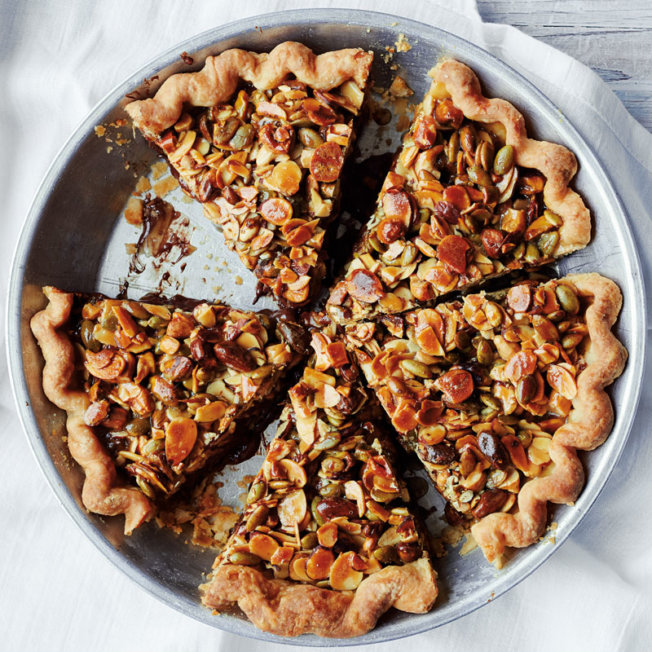
Practice your technique by baking one of our favorite seasonal Williams Sonoma pies:
- Candy Bar Pie
- Pecan Pumpkin Butter Pie
- Pecan Pie
- Salted Caramel Apple Pie with Lattice Crust
- Bourbon Pumpkin Pie with Nutmeg Tuiles
19 comments
really nice article, love reading it
Thanks for sharing very nice post
Its really a wonderful recipe,i cant stop myself from trying it,thanks from Typhoon TV APK
[…] 7. How to Make Flaky Piecrusts | Williams Sonoma Taste […]
Flaky Piecrust…Can I eliminate the vegetable shortening and replace it with more butter and if so would it change the final result?
[…] 6. How to Make Flaky Piecrusts | Williams Sonoma Taste […]
[…] Makes a 10″ pie – pie crust – 2 tbsp oil – 2 onions, diced – 2 celery stalks, finely chopped – 4 cloves […]
[…] How to Make Flaky Piecrusts | Williams Sonoma Taste […]
Sandra : )
The recipe for the flaky pie crust, Is on this page directly above our/your posts….
Are you aware of a “crimper” tool, like scissors for sealing tops and bottoms of pies? I would love to have one. We make small meat and fruit pies for seniors in our small town at our church and we have to let the tops thaw (they come to us frozen) somewhat to crimp with a fork, sometimes this doesn’t work and they separate. Helllllpppp!!!
[…] pie cutters make crust decorations simple; just double the dough portion of the recipe so you’ll have leftover dough to work […]
Keli, I think the difference is the recipe you are linking to is for a “basic” pie crust. The tips in this blog post are specific to a “flaky” crust.
This post talks about how important cold butter is .. but there is no butter in the recipe this blog post links to – is the recipe wrong?
https://www.williams-sonoma.com/recipe/basic-pie-pastry.html
[…] grew up on quiche, not frittata, because we love any excuse for a flaky, buttery crust in the South. And cheese and bacon, of […]
If your are using all water you are doing it wrong…Cooks Illustrated pie crust recipe using chilled vodka and water rocks! no flavor from the vodka and super easy. Better living through modern chemistry!
I’m loving a pate brisee crust, all butter, milk and an egg yolk. Soooo flaky and delicious. I just don’t like the shrinkage.
https://www.williams-sonoma.com/recipe/basic-pie-dough.html Click on any recipe and it has a link to the dough.
Also some step by step pictures would be great. 😀 Thank you for the tips!
Umm..where is the recipe for the pie crust?